Why Clarity Matters
Uncertainty is the enemy of safety. Knowing what constitutes harassment ensures you can take action and organisations can respond appropriately.Quick Checklist: Would You Tick Any?
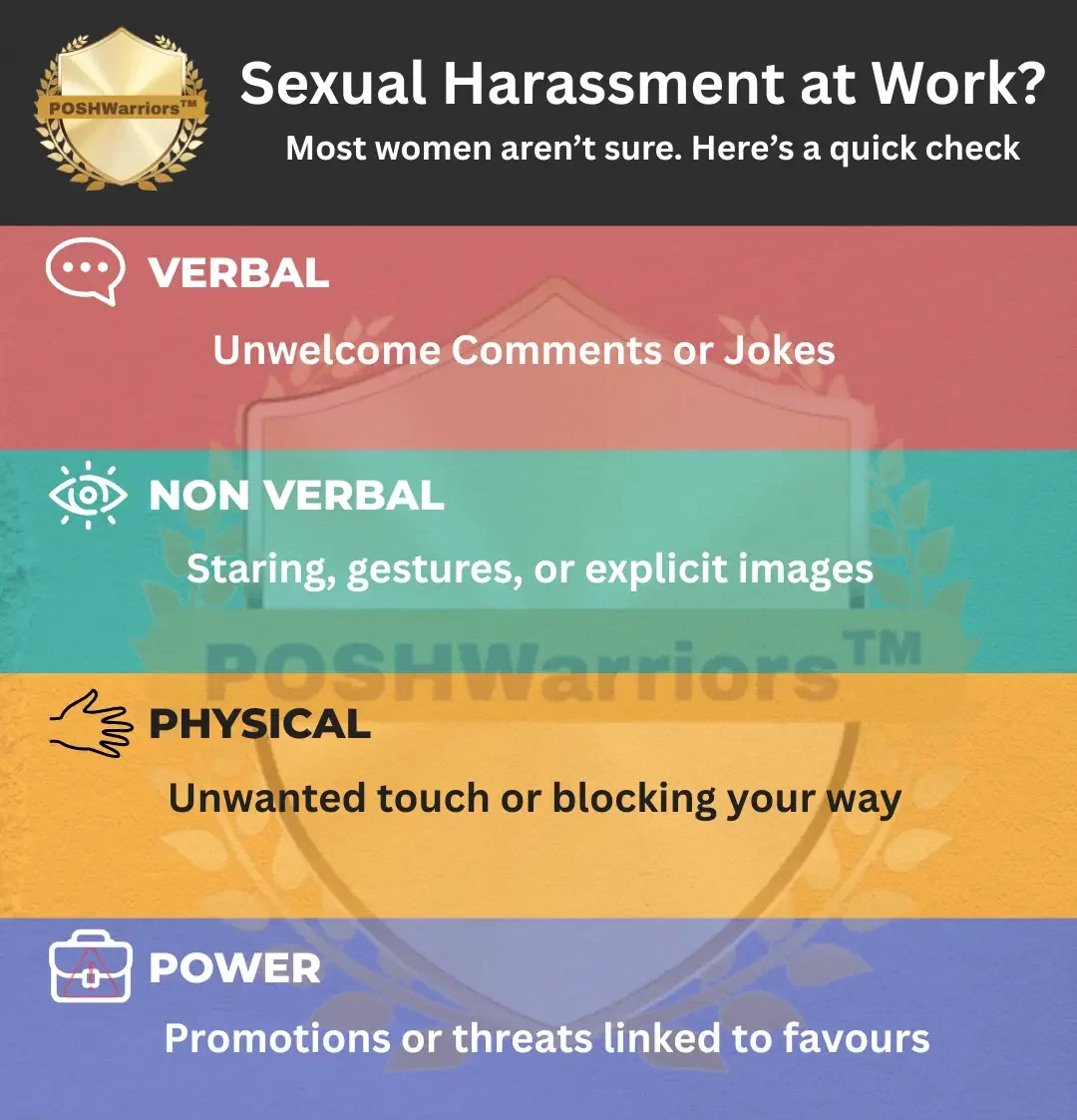
 Verbal
- Unwelcome comments about appearance, body, or clothing
- Sexual jokes or repeated comments you asked to stop
- Persistent personal questions about your private life
 Non-Verbal
- Leering, suggestive gestures, or offensive images
- Sharing explicit content at work or on work devices
- Staring or behaviour intended to intimidate
 Physical
- Unwanted touching, brushing, or patting
- Blocking your path or cornering you
- Any form of sexual assault or attempt
 Power / Pressure
- Promises of promotion or benefits in exchange for favours
- Threats, demotion, or hostile treatment when you refuse
- A culture that tolerates pressuring or punitive behaviour
Three Practical Rules
- Unwelcome is the test: If it’s not invited and makes you uncomfortable, take it seriously.
- One incident can be enough: Harassment doesn’t require repetition to be actionable.
- Document as you go: Dates, times, witnesses, screenshots — they matter.
“What matters is impact, not intent.” Any behaviour that undermines dignity or creates fear must be addressed.
Practical Steps to Take
- Ensure immediate safety.
- Record facts — date, time, place, people involved.
- Preserve evidence — messages, emails, screenshots.
- Tell a trusted contact — colleague, mentor, friend.
- Report formally to your Internal Committee (IC) or HR.
For Witnesses
- Offer support to affected colleagues.
- Document what you saw; volunteer as a witness if needed.
- Raise concerns through proper channels to help improve workplace culture.
